
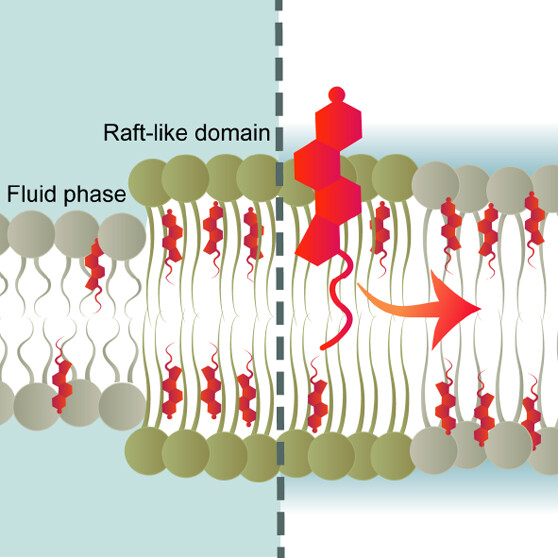
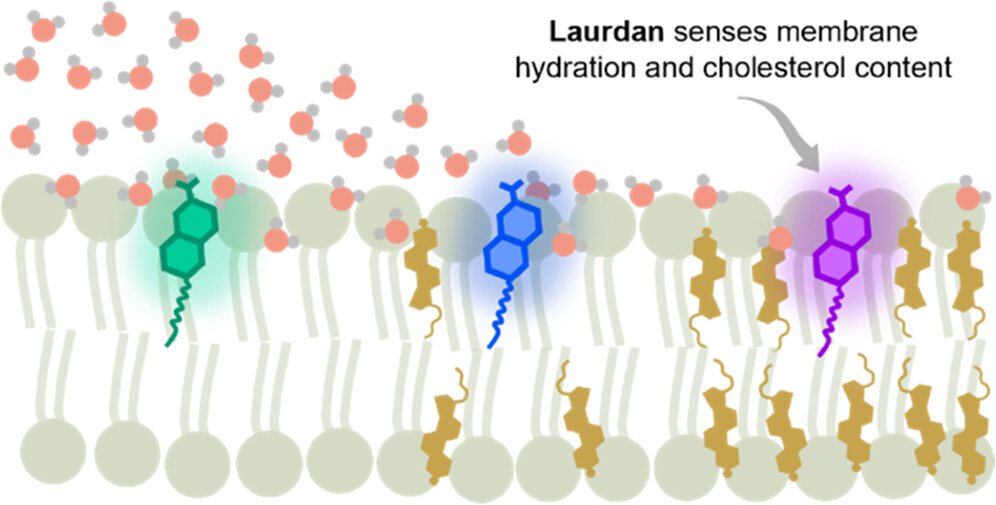
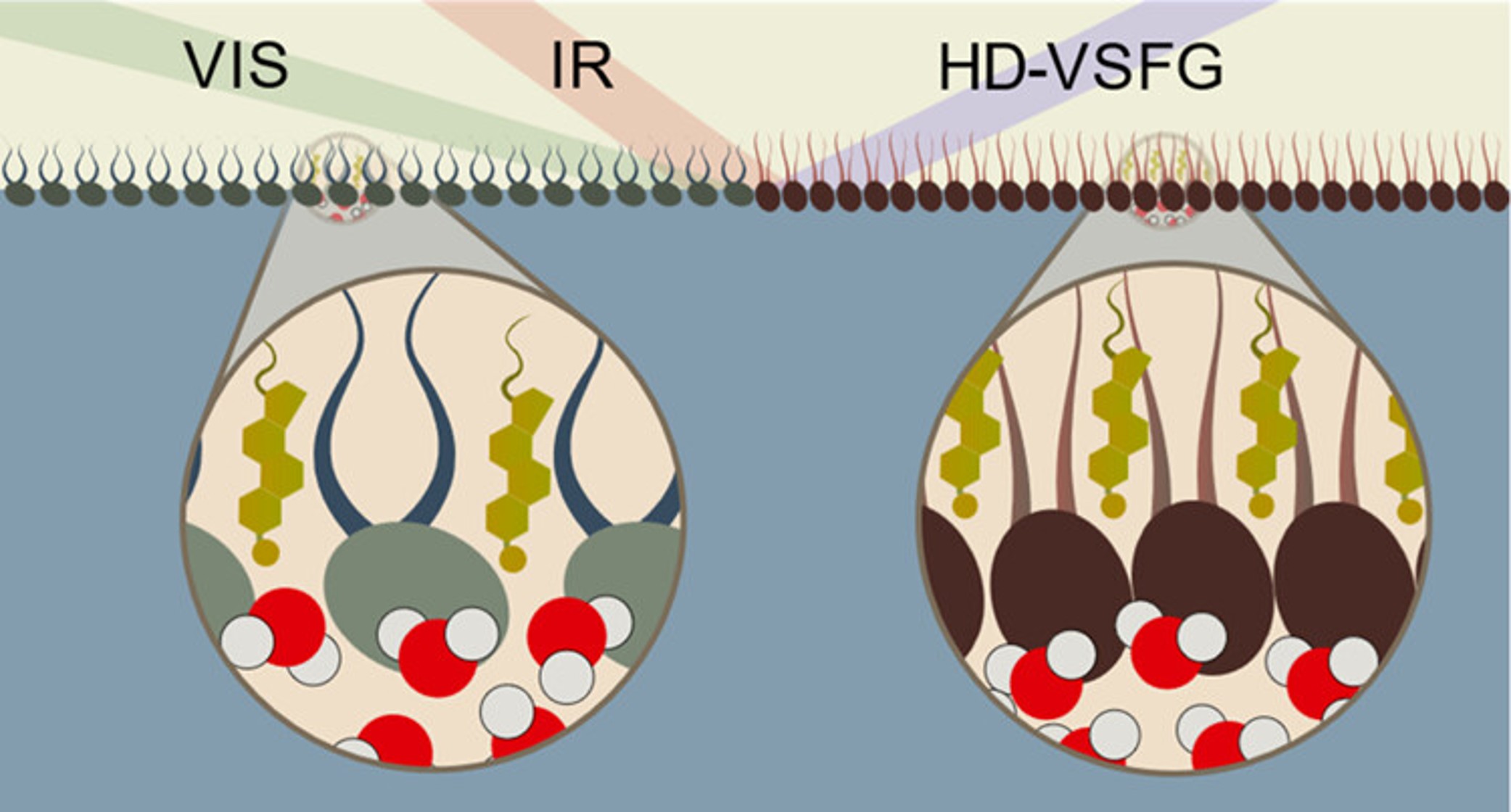
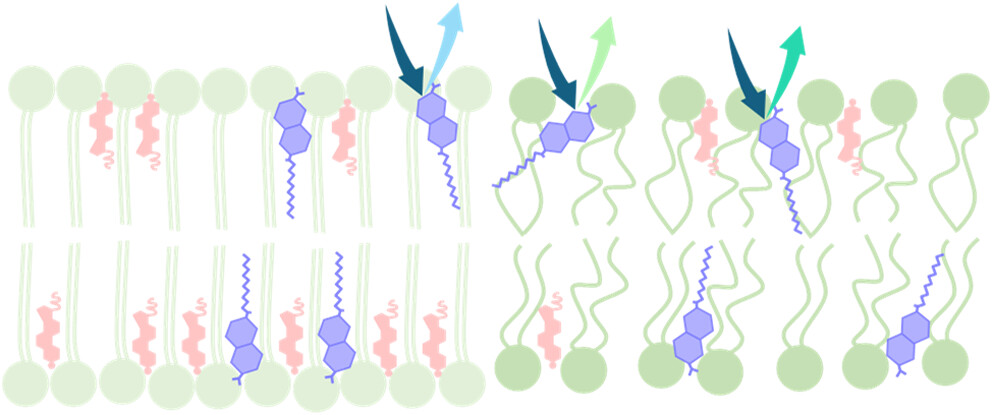
 Investigation of the impact of environmental conditions (e.g. temperature, pH, hydration) on lateral organization and dynamics of biomimetic membranes.
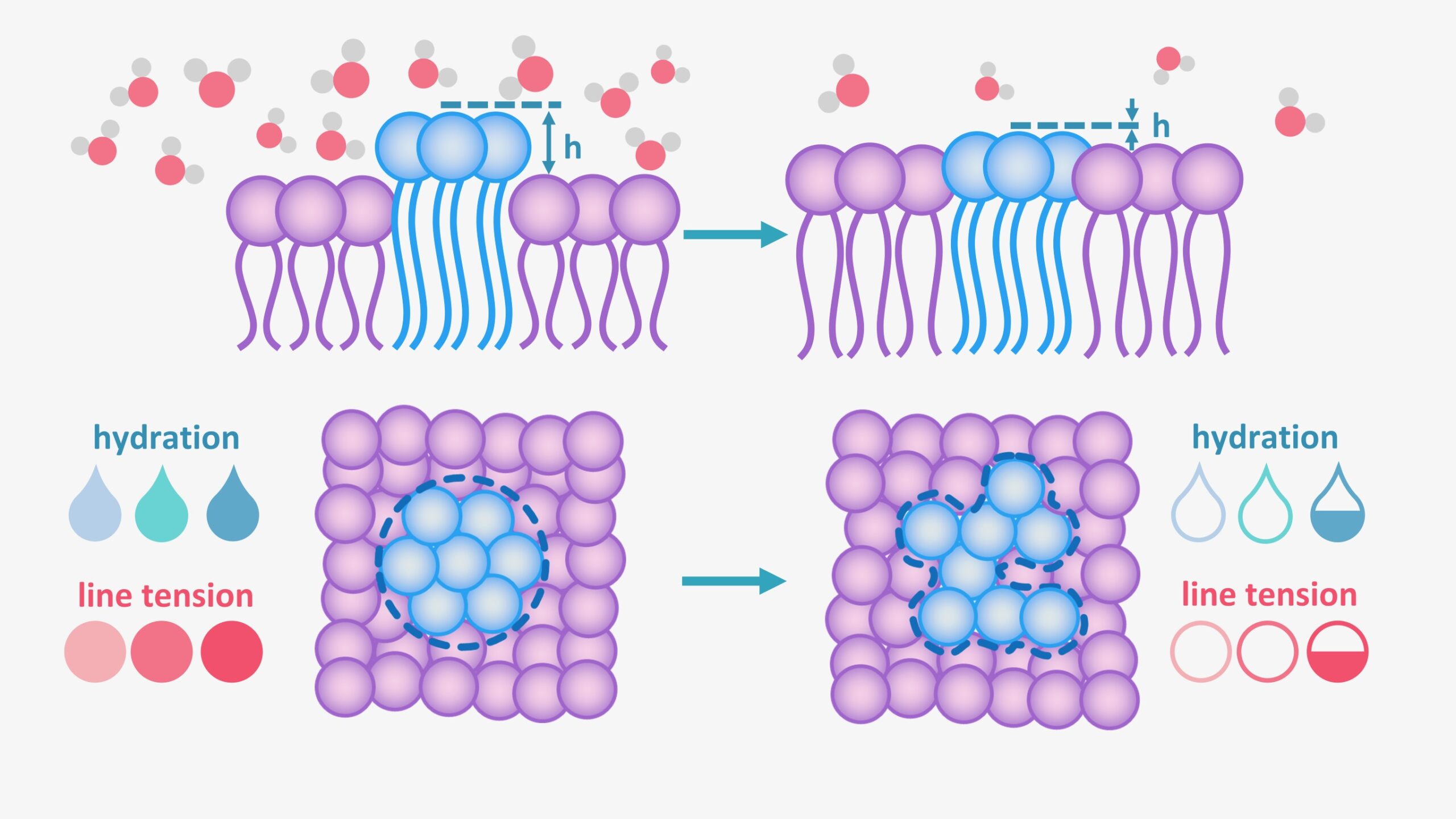
Analysis of nanoscale structural response of biomimetic membranes to controlled hydration using atomic force microscopy.
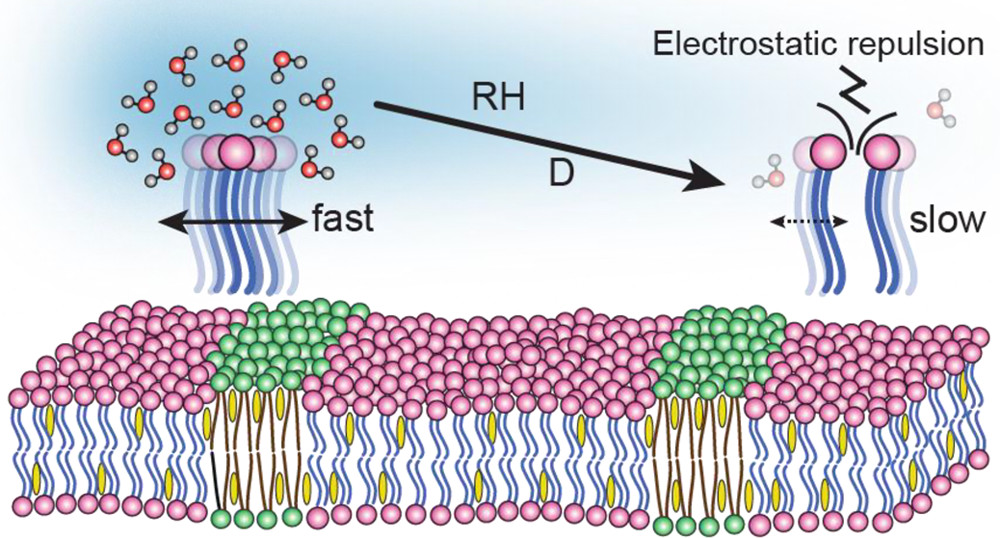
Elucidation of hydration-dependent effects of ions on the lateral organization, structural heterogeneity and dynamics of lipid membranes.
Tracking the spatial orientation of molecules (e.g. solvatochromic probes, peptides) in biomimetic membranes.
Probing the influence of cholesterol on interfacial water structure through sum-frequency generation spectroscopy (SFG).
Investigating the effect of steroid hormones on biophysical properties of biomimetic membranes.
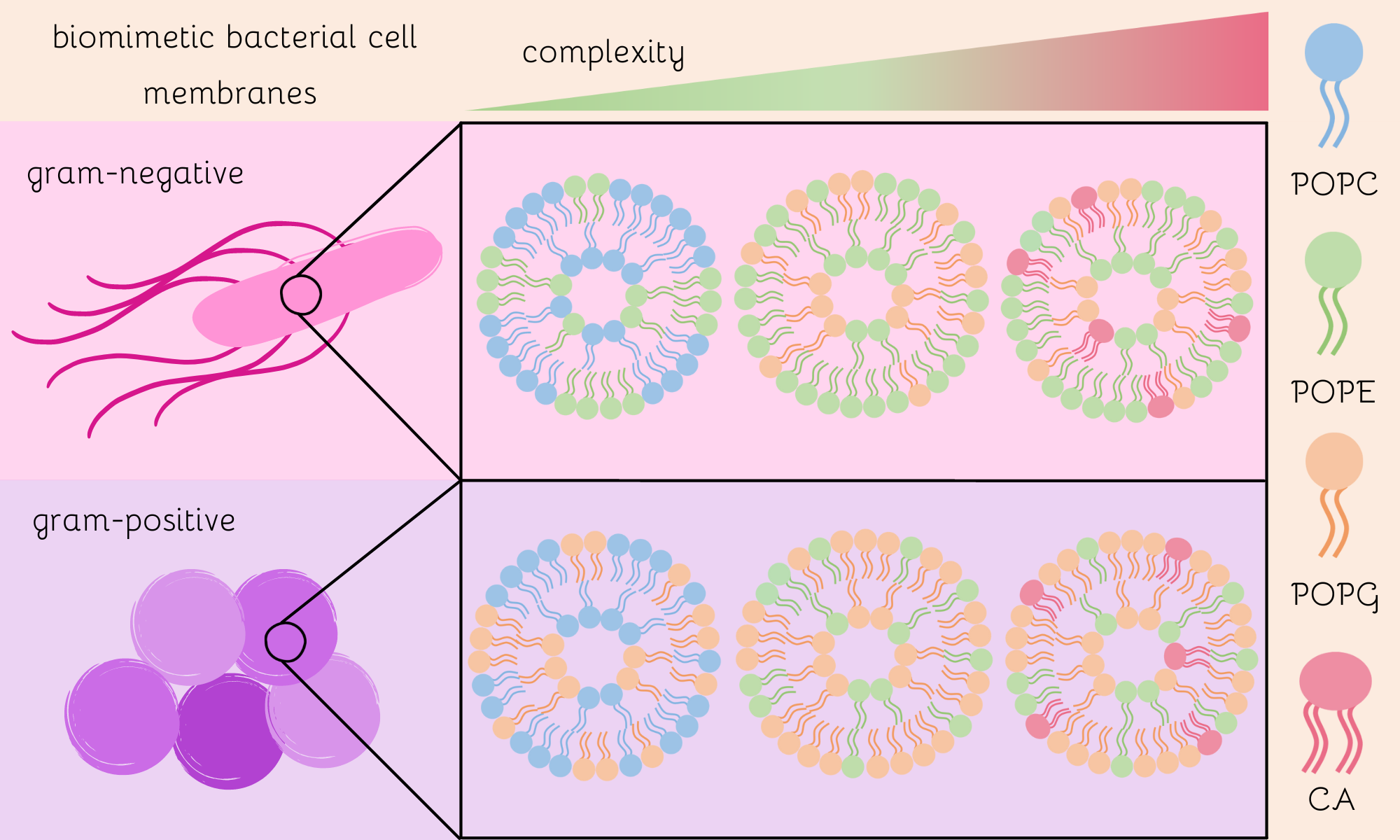
Development of model lipid bilayers as platforms for replicating bacterial membranes.
Deciphering antibiotic-membrane interactions using biomimetic models of gram-positive and gram-negative bacteria.
Mapping local membrane environment through fluorescence lifetime imaging microscopy (FLIM).
 Dry and Alive – the impact of hydration on the properties of bacterial cell membranes and its role in prokaryotic anhydrobiosis, NCN Preludium 22, 2024-2027, 2023/49/N/ST4/02140, PI: M. Eng. Emilia Krok
- Molecular freeze dance – tracking the spatial orientation of molecules in biomimetic cell membranes, NCN SONATA BIS 12, 2023-2028, 2022/46/E/ST4/00132, PI: Dr. habil. Eng. Łukasz Piątkowski, prof. PUT
- Unraveling the effect of steroid hormones on biophysical properties of biomimetic cell membranes, NCN Preludium 21, 2023-2026, 2022/45/N/ST4/01442, PI: M. Eng. Hanna Orlikowska-Rzeźnik
 Tracking the spatial orientation of fluorescent probes in cell membranes, Pearls of Science, Ministry of Education and Science, 2023-2027, PN/01/0059/2022, PI: M. Eng. Agnieszka Lester
- Seeing the invisible – elucidating the nature of sterol aggregates in biomimetic cell membranes using modulation transfer microscopy, NCN OPUS 19, 2021-2024, 2020/37/B/ST4/01785, PI: Dr. habil. Eng. Łukasz Piątkowski, prof. PUT
 How do transmembrane proteins deal with the hydrophobic mismatch?, EMBO Young Investigator Small Grant, European Molecular Biology Organization, 2022–2024, PI: Dr. habil. Eng. Łukasz Piątkowski, prof. PUT
 Stimulated emission microscopy for imaging of systems with very low fluorescence efficiency, in particular selected components of model biological membranes, Diamont Grant, 8th edition, 2019-2023, 0042/DIA/2019/48, PI: M. Eng. Hanna Orlikowska-Rzeźnik
- Biological water: the role of hydration in cell membrane organization, EMBO Installation Grant, 2019-2025, IG 4147, PI: Dr. habil. Eng. Łukasz Piątkowski, prof. PUT
 HYDRA – Elucidating the role of hydration heterogeneity and hydrophobic mismatch in biomimetic cell membranes organization, FIRST TEAM Grant, FNP, 2019-2022, POIR.04.04.00-00-5D32/18-00, PI: Dr. habil. Eng. Łukasz Piątkowski, prof. PUT